



HygroHeat Patented Thermal Technology
HygroHeat™ Within a Patented Performance System
HygroHeat™ is LAETTS' patented moisture-activated thermal technology, engineered to convert naturally occurring moisture into adaptive warmth. Rather than functioning as a standalone feature, it works as one core technology within a broader patented performance architecture designed for consistent comfort in real-world conditions.
Within the Merino Thermal System and Integrated Performance System, HygroHeat™ works together with complementary technologies to create balanced thermal performance, natural comfort, and long-term reliability. Explore the complete patented system to see how these technologies are engineered to function as one.
How it Works
HygroHeat™ generates warmth by converting naturally occurring moisture into heat through hygroscopic thermal fibers. As moisture levels change during wear, the technology continuously responds to help maintain thermal comfort without batteries, external power, or bulky insulation.
-

Step 1. Moisture Absorption
During normal wear, moisture generated by the foot is naturally absorbed by HygroHeat™ hygroscopic fibers, providing the energy source that activates the thermal process.
-

Step 2. Heat Generation
As the fibers absorb moisture, a natural hygroscopic reaction converts that moisture into gentle warmth, helping raise the microclimate temperature inside the sock. -

Step 3. Adaptive Thermal Comfort
The generated warmth works together with the sock's material structure to help maintain a comfortable foot environment as activity levels and surrounding conditions change¹ ².


Engineering Summary
Unlike conventional insulation that simply traps heat, HygroHeat™ actively converts naturally occurring moisture into adaptive warmth, providing continuous thermal support throughout changing conditions.

Inside the Technology: Ceramic-Infused Thermal Yarn
At the heart of HygroHeat™ is a specially engineered ceramic-infused thermal yarn. Designed to work alongside hygroscopic fibers, this advanced yarn helps optimize thermal performance by supporting heat retention and promoting a more stable microclimate inside the sock.
Ceramic particles embedded within the yarn interact with naturally generated body heat to help retain warmth more efficiently. Combined with HygroHeat™'s moisture-activated thermal process, this dual-function construction contributes to balanced warmth, improved comfort, and consistent performance during prolonged wear.
Engineering Summary
HygroHeat™ combines moisture-activated hygroscopic fibers with ceramic-infused thermal yarn to create a complementary thermal system that enhances warmth while maintaining natural comfort.

Why it Matters
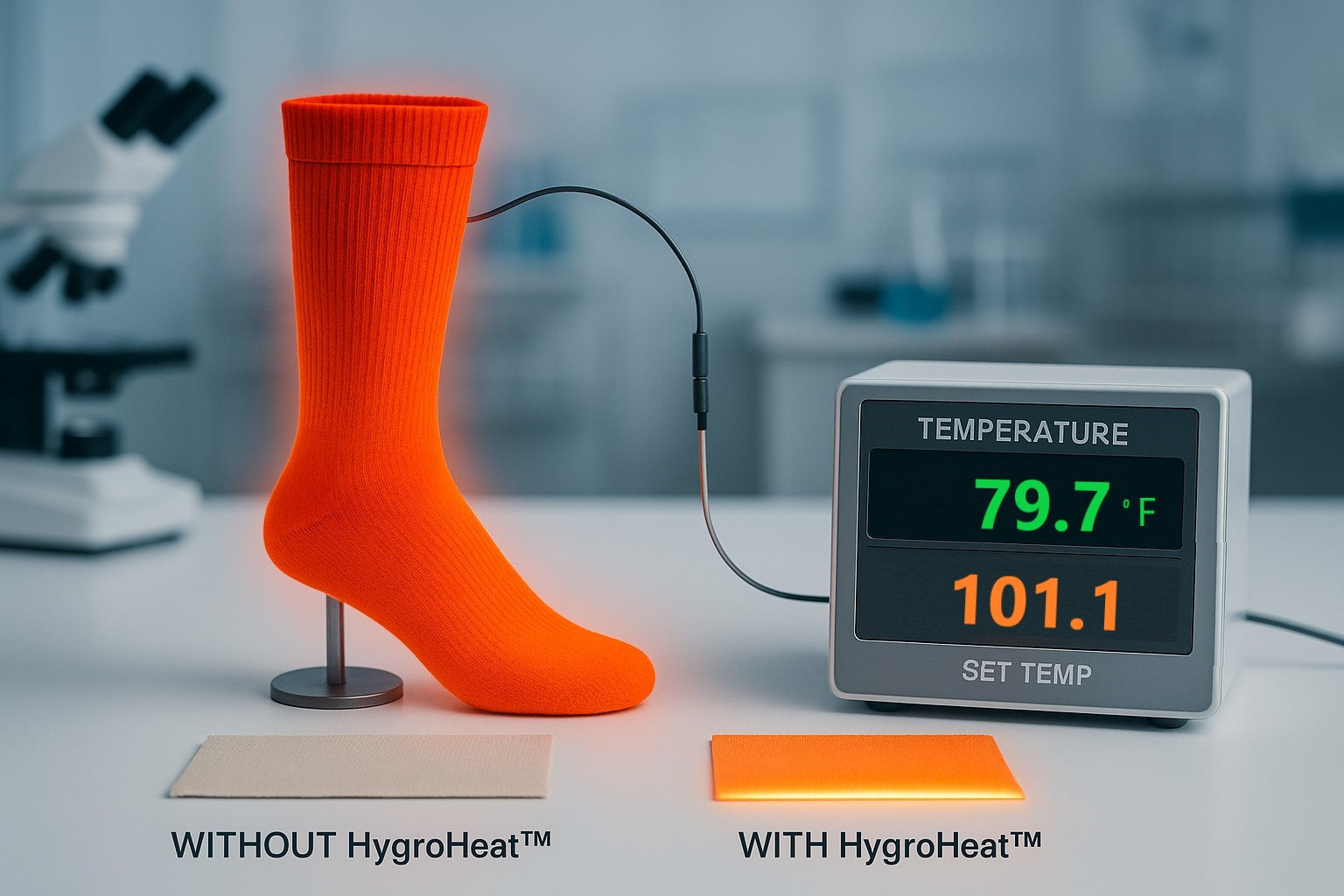
The infrared comparison demonstrates HygroHeat™'s ability to help maintain a warmer foot environment under equivalent test conditions. By converting naturally occurring moisture into adaptive warmth, the technology supports thermal comfort throughout changing activity levels and outdoor conditions.
A warmer, more stable foot environment can help reduce the discomfort associated with cold, damp conditions while supporting comfort during extended time outdoors. Whether skiing, hiking, snowmobiling, or working in winter environments, HygroHeat™ helps your feet stay comfortably warm without relying on bulky insulation or external heat sources.
Engineering Summary
Rather than simply trapping body heat, HygroHeat™ actively responds to moisture to help maintain adaptive thermal comfort throughout changing winter conditions.
HygroHeat™ Within Thermal Performance
HygroHeat™ is one of the core technologies that contributes to LAETTS' Thermal Performance System. By converting naturally occurring moisture into adaptive warmth, it supports the balanced thermal environment required for consistent comfort during changing winter conditions.
Working within the Merino Thermal System, HygroHeat™ complements natural merino wool and other engineered materials to regulate warmth, manage moisture, and support long-lasting thermal comfort. Together, these elements function as an integrated system rather than independent components.
The result is Thermal Performance—a balanced foot environment that helps maintain warmth, comfort, and stability throughout changing activity levels and outdoor conditions.
Engineering Summary
HygroHeat™ is a core thermal technology within the Merino Thermal System, contributing to the integrated Thermal Performance achieved by the LAETTS Integrated Performance System.

From Patent to Performance
Every patented innovation begins with an idea, but its true value is measured by real-world performance. The HygroHeat™ patent protects LAETTS' original moisture-activated thermal technology, forming the foundation of a system engineered to deliver dependable warmth in changing winter conditions.
Transforming a patented invention into everyday performance requires more than innovation alone. Through advanced materials, precision knitting, and integrated engineering, HygroHeat™ becomes part of every LAETTS sock—delivering adaptive thermal comfort where it matters most.
Behind every patent is a commitment to solving real outdoor challenges through engineering and innovation. Explore Our Story to discover how HygroHeat™ evolved from an original idea into one of the technologies that defines the LAETTS Engineered Performance System.

Engineered Warmth, Wherever You Go
HygroHeat™ is engineered to help keep your feet comfortably warm across changing winter environments. From the ski slopes to the trail, and from daily commutes to outdoor work, it delivers adaptive thermal comfort wherever your journey takes you.
At LAETTS, warmth isn't simply added—it is engineered. Every pair reflects our commitment to transforming innovative technology into dependable performance for real-world adventures. you.
Explore two key studies below:
Laetts' HygroHeat™ technology is grounded in FIR textile research.
1. Washington,J. et al. (2018)
1. Washington,J. et al. (2018)
Randomized Controlled Trial Comparing the Effects of Far-Infrared Emitting Ceramic Fabric Shirts and Control Polyester Shirts on Transcutaneous PO₂. Journal of Textile Science & Engineering, 8(2), 1000349.
2. Vatansever,F. & Hamblin, M. R. (2012)
2. Vatansever,F. & Hamblin, M. R. (2012)
Far Infrared Radiation (FIR): Its Biological Effects and Medical Applications. Photonics & Lasers in Medicine, 1(4), 255–266. PMC Article
Read more about HygroHeat™ in Real Life
“It was the first time I didn’t dread putting on my boots.”
HygroHeat™ Within the Laetts System
A patented thermal engine operating inside a unified performance architecture
HygroHeat™ is one of the core technologies within the LAETTS Integrated Performance System, working alongside complementary technologies to deliver balanced thermal comfort and dependable performance in real-world winter conditions.
Together with the Merino Thermal System and other engineered performance technologies, HygroHeat™ contributes to a complete approach that integrates advanced materials, patented innovation, and system-based engineering into every pair of LAETTS socks.
Explore the LAETTS Technology ecosystem to discover how each technology works together to create the Engineered Performance System behind every adventure.